Payment Innovations Reshaping Decision-Making in Cross-Platform Mobile Casino Games
Zara Flores · Aug 27, 2026
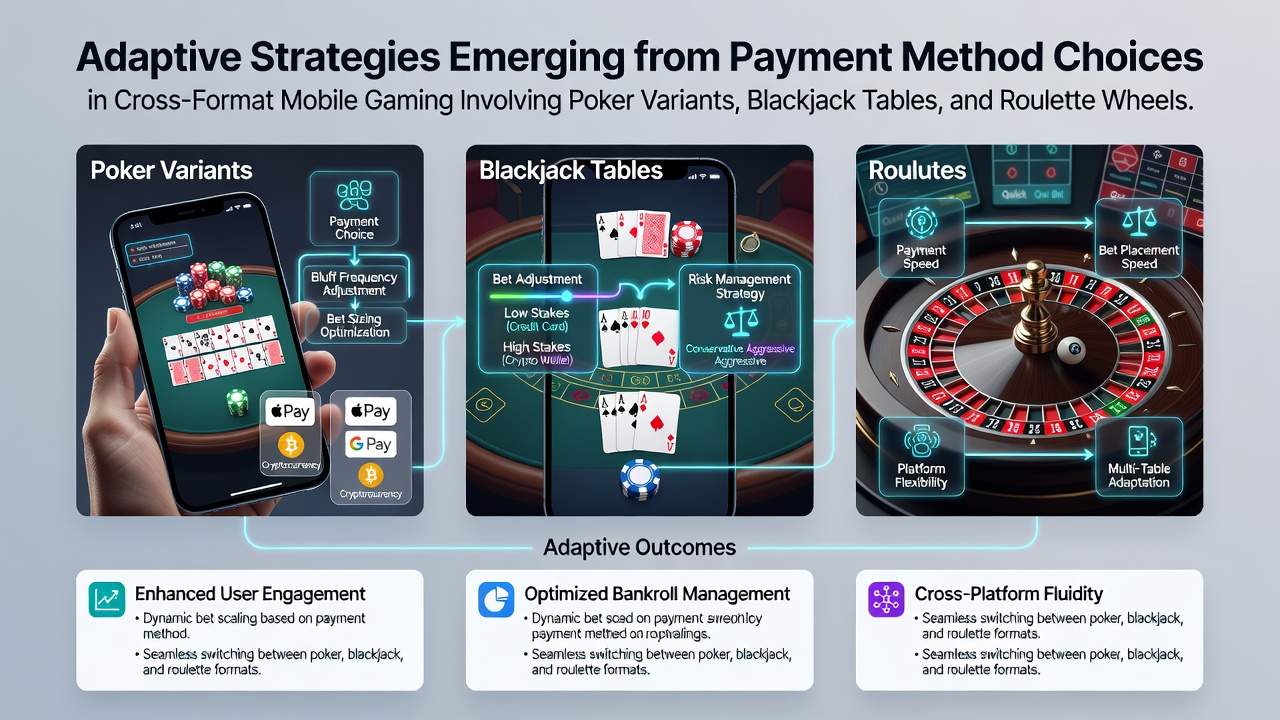
Payment Innovations Reshaping Decision-Making in Cross-Platform Mobile Casino Games
Payment Method Trends in Mobile Multi-Game Environments
Payment options available on mobile platforms continue to expand as operators integrate digital wallets, cryptocurrency transfers, and instant bank links alongside traditional card processing, and these choices directly affect how players approach poker variants, blackjack tables, and roulette wheels during single sessions. Data from industry monitoring services indicate that transaction speed and fee structures often determine session length and betting patterns, while security features influence whether users commit larger stakes in strategic games such as Texas Hold'em or multi-hand blackjack.
August 2026 figures reveal steady uptake of e-wallet solutions across North American and European markets, with users frequently switching between methods within the same app to manage bonus eligibility and withdrawal timelines. Observers note that players in roulette sessions tend to favor methods offering immediate deposits when chasing short-term wheel patterns, whereas poker participants select slower but lower-cost options during extended tournament play to preserve bankrolls across multiple tables.
How Deposit Speed Alters In-Game Tactics
Instant payment rails enable rapid re-buys during poker events, allowing participants to maintain aggression after early losses without pausing for verification delays, and this pattern appears consistently in data collected from hybrid apps that combine card games with live dealer roulette. Blackjack strategies shift when users rely on cryptocurrency because confirmation times introduce brief pauses that can coincide with rule changes or side-bet opportunities, prompting some players to adjust basic strategy charts on the fly.
Research from academic gaming studies shows that transaction reliability correlates with risk tolerance levels, where dependable methods encourage higher variance plays in roulette while less predictable options lead to more conservative betting in blackjack. Those monitoring app analytics report that users who alternate between wallet types during a single evening often recalibrate their approach to pot odds calculations in poker variants, treating each payment switch as a natural break that resets decision-making frameworks.
Regional Regulatory Influences on Payment Selection
Regulatory bodies across different jurisdictions shape available methods, with the Nevada Gaming Control Board publishing updated guidelines that emphasize transaction transparency in mobile environments, while Canadian provincial authorities track cross-border wallet usage in multi-format titles. These frameworks encourage operators to display clear fee schedules, which in turn affect how participants weigh the cost of frequent deposits against potential returns from roulette progressions or blackjack doubling strategies.
One report issued by the Australian Communications and Media Authority highlights increased adoption of regulated instant transfer services among mobile users who engage with poker tournaments that also feature automated reel bonuses, noting that clearer cost disclosures correlate with steadier participation rates rather than erratic session spikes. Such regional differences create distinct behavioral clusters, where North American players more readily adopt cryptocurrency for its perceived anonymity in high-stakes blackjack, while Asia-Pacific markets show stronger preference for linked bank accounts that streamline larger roulette wagers.
Security Protocols and Strategic Adjustments
Enhanced encryption standards built into newer payment gateways reduce hesitation around storing card details, enabling smoother transitions between poker sit-and-gos and live roulette streams without repeated logins. Experts tracking user behavior observe that platforms emphasizing two-factor authentication see higher retention in multi-game environments because players feel more secure extending sessions across blackjack variants and wheel-based side bets.
Transaction logs analyzed in recent industry white papers demonstrate that users who encounter failed payments mid-session often tighten their betting spreads in subsequent hands or spins, a pattern that appears across both casual and professional cohorts. This adjustment occurs because interrupted funding forces recalibration of remaining capital, particularly when tournament structures in poker impose strict blind increases that leave little room for conservative recovery plays.
Conclusion
Payment method selections continue to intersect with gameplay mechanics in measurable ways across mobile platforms hosting poker, blackjack, and roulette simultaneously. Available data indicate that speed, cost, and security features each prompt distinct tactical responses, from aggressive re-buys in card games to measured progression bets on the wheel. Regulatory updates and technological improvements will likely sustain these dynamics as operators refine options to match evolving player requirements in cross-format environments.